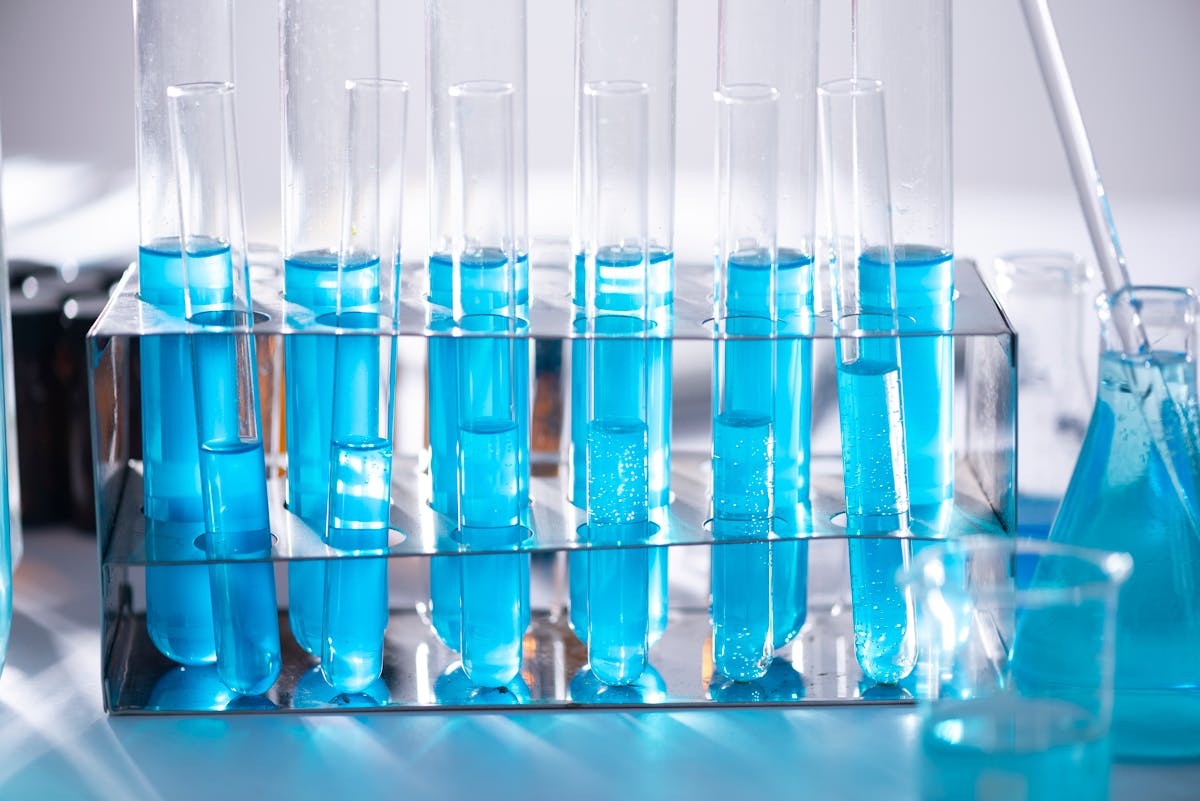
If you are writing NECO GCE Chemistry, tomorrow is a full three-paper day — and, like Literature today, the paper candidates most often miss is the one in the afternoon. Tomorrow, Thursday 12 November, Chemistry Paper III (Objective) holds from 10:00 to 11:00 am, Paper II (Essay) follows from 11:00 am to 1:00 pm, and Paper I (Alternative to Practical) closes the day from 2:00 to 4:00 pm. Three papers, three different skills, one day. Objective rewards fast, accurate recall and calculation. Essay rewards structured explanation. Alternative to Practical rewards careful observation, tidy tables and correct working.
This guide sets out tomorrow's three sittings exactly as NECO timetabled them, shows you how to use tonight without cramming, and works through a complete titration calculation.
Key Takeaways
- Chemistry is tomorrow: Thursday 12 November — all three papers in one day. Do not plan your day around the morning only.
- Paper III (Objective), code 2023: 10:00–11:00 am — one hour of objective questions across the whole syllabus.
- Paper II (Essay), code 2022: 11:00 am–1:00 pm — two hours. Show every step of every calculation; method marks are real marks.
- Paper I (Alternative to Practical), code 2021: 2:00–4:00 pm — two hours in the afternoon. Return for it: many candidates check only the date, not the time column.
- Tonight's job is selection, not new learning: revisit formulae, definitions and test observations, do one timed titration calculation, then stop and sleep.
- Today's papers: Literature in English completes its three papers today, Wednesday 11 November — Objective 10:00–11:00 am, Prose 11:00 am–1:00 pm and Drama & Poetry 2:00–3:15 pm. If you write both subjects, rest before tonight's Chemistry revision.
The three Chemistry sittings at a glance
| Date | Paper | Code | Duration | Time |
|---|---|---|---|---|
| Thursday 12 November | Paper III — Objective | 2023 | 1 hour | 10:00–11:00 am |
| Thursday 12 November | Paper II — Essay | 2022 | 2 hours | 11:00 am–1:00 pm |
| Thursday 12 November | Paper I — Alternative to Practical | 2021 | 2 hours | 2:00–4:00 pm |
Check these against the full NECO GCE 2026 timetable guide — all 39 papers — and remember NECO's rule: where the question paper's time differs from the timetable, the question paper's time applies. Be seated 30 minutes early, with your photocard. Mobile phones and smart watches are prohibited in the hall.
Use tonight properly: formulae and observations, not a new textbook
After today's papers, the temptation is to start Chemistry from page one. Resist it — tonight cannot hold the whole syllabus, and trying will cost you sleep. Tonight has three jobs. First, go through the formulae you must write without thinking: amount in moles = mass ÷ molar mass, and concentration = moles ÷ volume in dm3. Second, revisit the standard observations — colours of common precipitates, gases and their tests. Third, do one timed titration calculation using the method below. Then lay out your photocard and pens, and stop. A rested candidate reads question words accurately, and accurate reading is where the marks begin.
Paper III Objective: accuracy under the clock
The morning Objective paper moves quickly — one hour for questions from across the syllabus, including short calculations. Do not leave a question blank: eliminate clearly wrong options first, then choose between what remains. For calculation questions, write the working in the margin — a cm3-to-dm3 slip is the commonest way strong candidates lose easy marks, so convert every volume first: divide cm3 by 1,000. If a question names a gas test, a colour change or a precipitate, picture the experiment before you answer. Use spare minutes to return to flagged questions, not to change answers on a guess.
Paper II Essay: method is marks
The Essay paper, 11:00 am to 1:00 pm, is where structured answers win. Whatever the question — mole calculations, organic chemistry, electrolysis, rates or industrial processes — the principle is the same: a correct final number with no working earns little if it is wrong, while clear working earns method marks even when the last step slips. Build every calculation in the same order: write the balanced equation, state what you are finding, show the substitution, then give the answer with its unit. For descriptive questions, answer in points, one idea per line, and use the exact terms in the question. Choose questions you can complete, and watch the clock so your final answer is not a rushed paragraph.
Sharpen that calculation habit tonight and in the morning with free CBT practice and past questions in short timed blocks — and keep your wider 2027 registrations in view on our exam hub while this diet finishes.
Paper I Alternative to Practical: the afternoon paper
After the Essay ends at 1:00 pm you have one hour before Alternative to Practical begins at 2:00 pm. Eat, drink water and rest away from answer arguments — that gap is part of the examination. This paper does not ask you to perform the experiment; it gives you results, readings and observations and asks you to process them like a practical candidate. Complete tables neatly, calculate averages from concordant titres only, plot graphs with labelled axes where asked, and state observations exactly as given — do not invent a colour the data does not show. Units are part of the answer here.
Worked example: a titration calculation, step by step
The practice task: In a titration, 25.0 cm3 of a sodium hydroxide solution was neutralised by 20.00 cm3 of hydrochloric acid of concentration 0.10 mol/dm3. Calculate the concentration of the sodium hydroxide solution. Work it in four steps:
- Step 1 — write the balanced equation. NaOH + HCl → NaCl + H2O. The mole ratio of NaOH to HCl is 1 : 1, so the moles that reacted are equal.
- Step 2 — find the moles of the acid you know. Volume in dm3 = 20.00 ÷ 1,000 = 0.0200 dm3. Moles of HCl = concentration × volume = 0.10 × 0.0200 = 0.0020 mol.
- Step 3 — use the ratio. Because the ratio is 1 : 1, moles of NaOH in 25.0 cm3 = 0.0020 mol.
- Step 4 — turn moles back into concentration. Volume of NaOH in dm3 = 25.0 ÷ 1,000 = 0.0250 dm3. Concentration = 0.0020 ÷ 0.0250 = 0.080 mol/dm3.
Copy that shape tomorrow: equation first, then moles of what you know, then the ratio, then the answer with its unit. In the Alternative to Practical paper, apply the same discipline to the data table: discard the rough titre, average only the concordant titres that agree closely, and show the average in your working before you calculate.
How to split the two practical hours
- Minutes 0–15 — read and set up. Read every question, complete the results table carefully, and note which values the later parts will need.
- Minutes 15–90 — calculate in order. Work through each part in sequence, showing substitution and units. If a graph is required, choose the scale before you plot a single point.
- Minutes 90–120 — check and finish. Confirm averages, units and decimal places, and make sure every observation you quoted matches the data given — not what you expected to see.
What comes after Chemistry
Week 2 continues with Islamic Studies on Friday 13 November, before English Language on Saturday 14 November and General Mathematics on Wednesday 18 November. See our final-week plan for English and Mathematics. Walk-in registration at ₦43,000 remains the sole late route — for Chemistry it is already too late, so it only makes sense for late subjects such as English, Mathematics or Government.
Frequently Asked Questions
When is NECO GCE Chemistry in 2026?
Chemistry holds on Thursday 12 November 2026 in three sittings: Paper III (Objective, code 2023) from 10:00 to 11:00 am, Paper II (Essay, code 2022) from 11:00 am to 1:00 pm, and Paper I (Alternative to Practical, code 2021) from 2:00 to 4:00 pm.
What is the Alternative to Practical paper?
Paper I (Alternative to Practical) tests practical skills on paper. Instead of performing the experiment yourself, you are given readings, results and observations to record in tables, process in calculations and, where asked, present as a graph. Neat tables, correct averages from concordant titres, clear units and observations stated exactly as given are what earn the marks.
How do I avoid losing marks in Chemistry calculations?
Use the same order every time: balanced equation, moles of the substance you know, mole ratio, then the final calculation with its unit. Convert cm3 to dm3 by dividing by 1,000 before you substitute, and show every step — method marks protect you even if the final number slips.
Sources: NECO official 2026 SSCE External timetable, 4–21 November 2026 (Chemistry Paper III 2023 Thu 12 Nov 10:00–11:00 am, Paper II Essay 2022 Thu 12 Nov 11:00 am–1:00 pm, Paper I Alternative to Practical 2021 Thu 12 Nov 2:00–4:00 pm; Literature in English Wed 11 Nov; question-paper time prevails). Verify times on your photocard and at your centre.
Put this guide into practice
Reading is only half the work. Test yourself with free timed CBT questions — the same format as the real computer-based exam — and see your score instantly.