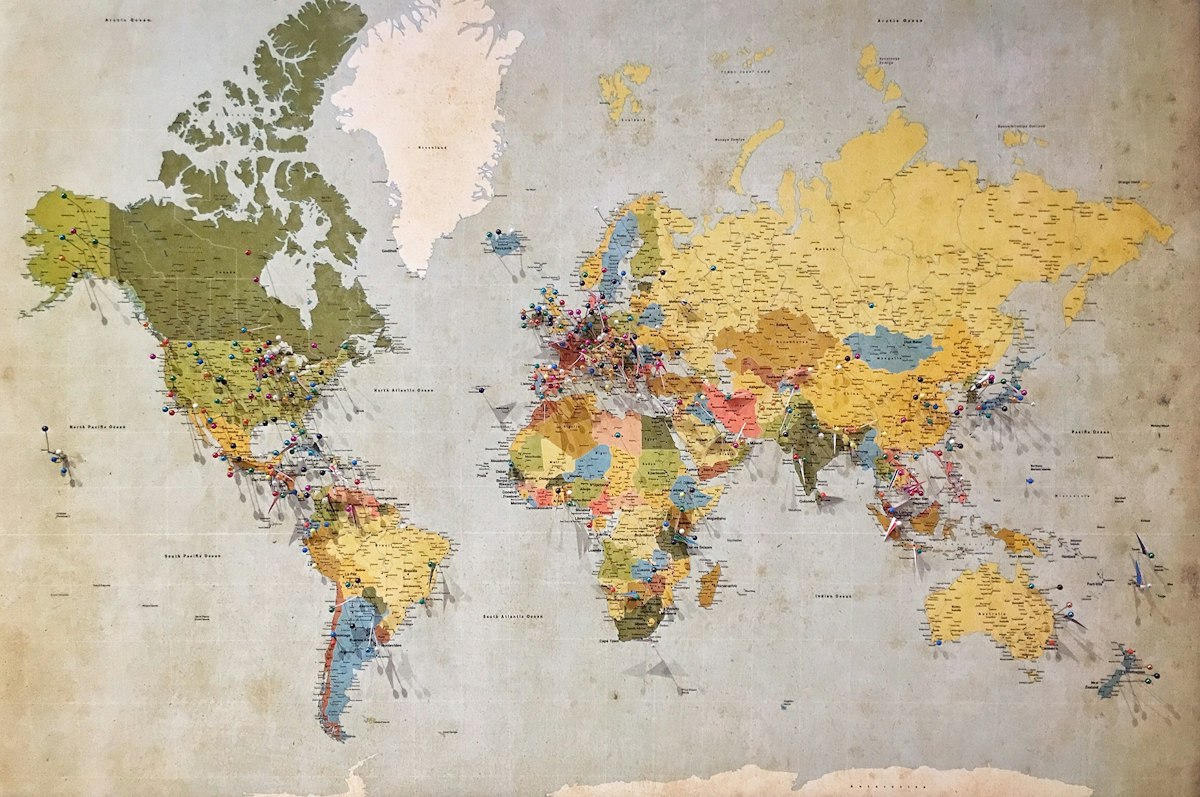
Map reading questions in WAEC Geography Paper 1 carry about 20-25 marks, yet most students struggle with scale calculations, contour interpretation, and bearing determination.
This comprehensive guide teaches you every map reading skill you need: from basic scale conversion to advanced cross-section drawing, with shortcuts that save precious exam time.
ðŸ—ºï¸ Understanding Topographic Maps
What is a Topographic Map?
A topographic map shows the natural and man-made features of an area, including relief (height and shape of land), drainage (rivers, streams), vegetation, settlements, and transportation routes.
Common WAEC Map Scales:
- 1:50,000 (most common) - 1 cm on map = 50,000 cm (0.5 km) on ground
- 1:100,000 - 1 cm on map = 100,000 cm (1 km) on ground
- 1:25,000 - 1 cm on map = 25,000 cm (0.25 km) on ground
💡 Quick Scale Conversion:
Formula: Divide by 100,000 to convert cm to km
- 1:50,000 -> 1 cm = 50,000 ÷ 100,000 = 0.5 km
- 1:100,000 -> 1 cm = 100,000 ÷ 100,000 = 1 km
- 1:25,000 -> 1 cm = 25,000 ÷ 100,000 = 0.25 km
📏 Mastering Map Scales
Types of Scales:
1. Representative Fraction (RF)
Expressed as 1:50,000 or 1/50,000
Meaning: 1 unit on map = 50,000 units on ground
2. Statement Scale
Expressed in words: "2 centimeters represent 1 kilometer"
3. Linear/Graphic Scale
A line on map showing actual distances
Scale Calculations Step-by-Step:
Problem Type 1: Finding Ground Distance
Question: On a map of scale 1:50,000, two points are 8 cm apart. What is the actual distance?
Solution:
- Understand scale: 1 cm = 50,000 cm on ground
- Multiply: 8 cm × 50,000 = 400,000 cm
- Convert to km: 400,000 cm ÷ 100,000 = 4 km
Answer: 4 km
âš¡ Quick Method for 1:50,000:
Multiply cm by 0.5 to get km directly
8 cm × 0.5 = 4 km ✓
Problem Type 2: Finding Map Distance
Question: Two villages are 3 km apart. How far apart will they be on a 1:50,000 map?
Solution:
- Convert to cm: 3 km = 3 × 100,000 = 300,000 cm
- Divide by scale: 300,000 ÷ 50,000 = 6 cm
Answer: 6 cm
âš¡ Quick Method for 1:50,000:
Divide km by 0.5 to get cm
3 km ÷ 0.5 = 6 cm ✓
Problem Type 3: Finding Map Scale
Question: On a map, 4 cm represents 2 km on the ground. What is the scale?
Solution:
- Convert to same units: 2 km = 200,000 cm
- Set up ratio: 4 cm : 200,000 cm
- Simplify to 1: 4 ÷ 4 : 200,000 ÷ 4 = 1 : 50,000
Answer: 1:50,000
🧭 Bearings and Directions
Understanding Bearings:
Bearing: The direction of one point from another, measured as an angle from North (0°) in a clockwise direction.
Cardinal Directions:
- North (N) = 000° or 360°
- East (E) = 090°
- South (S) = 180°
- West (W) = 270°
Intermediate Directions:
- North-East (NE) = 045°
- South-East (SE) = 135°
- South-West (SW) = 225°
- North-West (NW) = 315°
How to Measure Bearings:
Method 1: Using Protractor
- Place protractor center at starting point
- Align 0° with North direction on map
- Read angle clockwise to destination point
- Express as 3-digit number (e.g., 045°, 270°)
Method 2: Estimating Without Protractor
- Identify nearest cardinal direction
- Estimate angle from that direction
- Add to base angle (N=0°, E=90°, S=180°, W=270°)
Sample Bearing Question:
Question: Find the bearing of Point B from Point A.
Step-by-Step:
- Draw North line from Point A
- Draw line from A to B
- Measure angle clockwise from North to AB line
- If angle = 135°, bearing = 135° (SE direction)
Reverse Bearing: To find bearing of A from B:
- If bearing A to B = 135°
- Reverse bearing = 135° + 180° = 315° (or 135° - 180° if result > 360°)
- Bearing of A from B = 315° (NW direction)
âš ï¸ Common Bearing Mistakes:
- ❌ Measuring from South instead of North
- ❌ Measuring anticlockwise instead of clockwise
- ❌ Forgetting to use 3-digit format (write 045°, not 45°)
- ❌ Confusing "bearing OF" with "bearing FROM"
â›°ï¸ Contour Lines and Relief
What are Contour Lines?
Contour Line: A line joining points of equal height above sea level.
Key Contour Principles:
- Contour Interval: Vertical distance between consecutive contours (e.g., 20m, 50m)
- Closer contours = Steeper slope
- Wider spacing = Gentle slope
- Contours never cross (except at overhangs - very rare)
- Contours are continuous (form closed loops)
- V-shaped contours pointing upstream = River valley
Identifying Landforms from Contours:
1. Hill/Mountain
- Concentric circles, higher values inward
- Closely spaced = steep sides
- Widely spaced = gentle slopes
2. Valley
- V-shaped contours pointing upstream
- River flows in direction of V-point
- Lower values in center, higher on sides
3. Ridge/Watershed
- U-shaped or V-shaped contours pointing downhill
- Opposite of valley pattern
- Separates drainage basins
4. Plateau
- Flat top with widely spaced contours
- Steep sides with closely packed contours
- Elevated above surrounding land
5. Depression/Basin
- Concentric circles, lower values inward
- May have hachure marks pointing inward
6. Spur
- Ridge extending from hill/mountain
- U-shaped contours pointing away from high ground
7. Col/Pass
- Lowest point between two hills
- Hourglass or saddle shape
- Used for roads crossing hills
Calculating Gradient/Slope:
Formula: Gradient = Vertical Interval / Horizontal Distance
Example: Calculate gradient between points at 100m and 200m elevation, 2 km apart horizontally.
Solution:
- Vertical Interval (VI) = 200m - 100m = 100m
- Horizontal Distance (HD) = 2 km = 2000m
- Gradient = 100m / 2000m = 1/20 or 1:20
Interpretation: For every 20m horizontally, land rises 1m
Gradient Categories:
- 1:20 or steeper (1:10, 1:5) = Steep
- 1:20 to 1:50 = Moderate
- Gentler than 1:50 (1:100, 1:200) = Gentle
âœï¸ Drawing Cross-Sections
Step-by-Step Cross-Section Method:
What You Need:
- Graph paper
- Straight edge/ruler
- Sharp pencil
- Information from map (contour values, scale)
Procedure:
- Set up axes:
- Horizontal axis = distance along line (use map scale)
- Vertical axis = height/elevation (use contour interval)
- Choose vertical scale:
- Usually exaggerated (e.g., 1cm = 50m vertical, 1cm = 1km horizontal)
- Exaggeration makes landforms visible
- Vertical Exaggeration = Vertical Scale / Horizontal Scale
- Mark contour crossings:
- Place ruler along cross-section line on map
- Mark each point where contour crosses line
- Note elevation at each crossing
- Transfer points to graph:
- Plot distance (horizontal) vs elevation (vertical)
- Each contour crossing becomes a point
- Join points smoothly:
- Draw smooth curve through points
- Don't use straight lines between points
- Shape should reflect natural landforms
- Label features:
- Mark hills, valleys, rivers
- Show heights at peaks
- Indicate scale used
âš ï¸ Cross-Section Common Errors:
- ❌ Using same scale for horizontal and vertical (profile will be too flat)
- ❌ Joining points with straight lines (should be smooth curves)
- ❌ Not labeling axes with units
- ❌ Incorrect plotting of contour heights
- ❌ Forgetting to mark key features (rivers, peaks)
ðŸ—ºï¸ Map Symbols and Interpretation
Essential Map Symbols:
| Feature | Symbol/Representation |
|---|---|
| Rivers/Streams | Blue lines (single or double) |
| Roads | Red lines (major), yellow/brown (minor) |
| Railways | Black line with cross marks |
| Settlements | Shaded areas (black/grey), buildings shown |
| Vegetation | Green shading, symbols for forest/scrub |
| Spot Heights | Dot with number (exact elevation) |
| Trigonometric Station | Triangle with dot (survey point) |
| Bridges | Road/railway crossing river |
| Footpaths | Dashed lines |
| Cultivated Land | Usually white/pale color with field boundaries |
📝 Exam Strategy for Map Reading Questions
Time Allocation:
Map reading (Paper 1, Section A) = 30 minutes maximum
Question Types and Approach:
Type 1: Scale Calculations
- Time: 2-3 minutes
- Strategy: Use quick method formulas, show working
- Marks: Usually 2-3 marks
Type 2: Finding Bearings
- Time: 3-4 minutes
- Strategy: Draw North lines clearly, measure carefully
- Marks: Usually 2 marks per bearing
Type 3: Identifying Features
- Time: 1-2 minutes
- Strategy: Check map legend, be specific
- Marks: 1 mark each
Type 4: Describing Relief
- Time: 4-5 minutes
- Strategy: Mention height range, landforms, gradient
- Marks: Usually 3-4 marks
Type 5: Drawing Cross-Section
- Time: 12-15 minutes
- Strategy: Accurate plotting, smooth curves, proper labeling
- Marks: Usually 6-8 marks
Top Exam Tips:
- ✓ Read map scale and contour interval FIRST
- ✓ Use map legend/key for unfamiliar symbols
- ✓ Show ALL calculations with units
- ✓ Express bearings in 3-digit format (045°, not 45°)
- ✓ Use pencil for all drawings (graphs, cross-sections)
- ✓ Label axes on graphs and cross-sections
- ✓ Check your answers make sense (e.g., 500 km between two towns on map is wrong!)
- ✓ Practice with past question maps
🎯 Final Preparation Checklist
Master These Skills:
- ✓ Convert between scales (1:50,000, 1:100,000, 1:25,000)
- ✓ Calculate ground distance from map distance
- ✓ Measure bearings accurately with protractor
- ✓ Identify landforms from contour patterns
- ✓ Calculate gradients between two points
- ✓ Draw accurate cross-sections with vertical exaggeration
- ✓ Interpret map symbols and features
- ✓ Describe drainage patterns and relief
Practice Materials Needed:
- ✓ Past WAEC Geography maps (at least 5 different maps)
- ✓ Protractor (transparent, 360°)
- ✓ Pair of dividers or compasses
- ✓ Graph paper for cross-sections
- ✓ Ruler (30cm transparent)
- ✓ Sharp HB pencils
- ✓ Calculator
ðŸ—ºï¸ Practice Geography Questions
Test your map reading skills and master all Geography topics with our comprehensive practice questions!
Practice Geography Now